
What Is USP <1207> and How Does It Impact CCIT Testing?
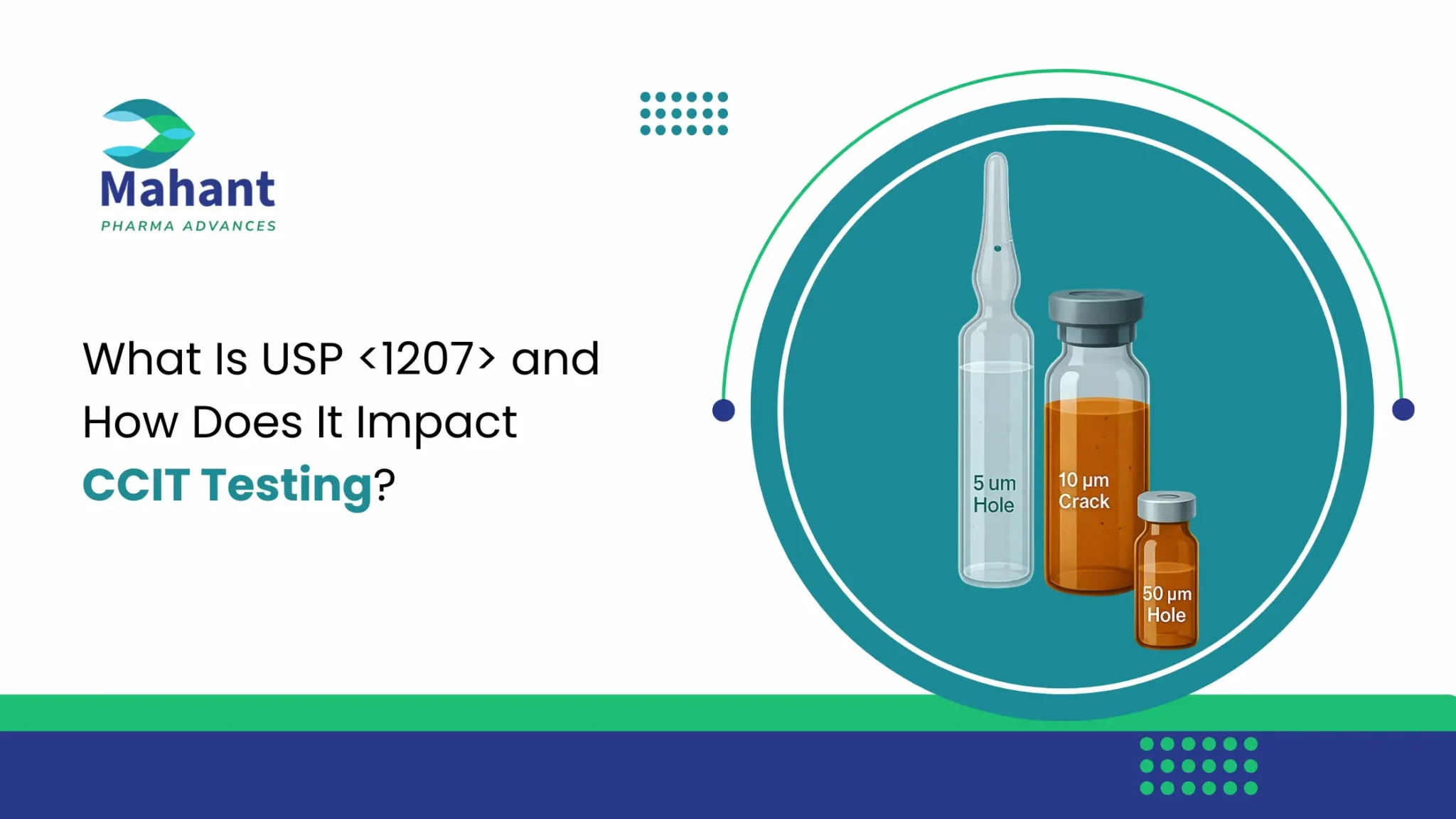
In the pharmaceutical and biotech sectors, it is essential to preserve the integrity of the container closure to guarantee the safety, sterility, and shelf life of the product. The regulatory bodies across the globe stress the importance of having effective testing procedures, and this is where the USP <1207> plays an important role. It is important to comprehend the significance of this guideline and its effect on Closure Integrity Testing.
What Is USP <1207>?
USP <1207> is a chapter in the United States Pharmacopeia that offers a broad spectrum of information on the topic of container closure integrity testing. It outlines scientifically valid principles for assessing whether a pharmaceutical package is capable of effectively preventing microbial ingress, gas transfer, or leakage throughout the life cycle of the product.
USP <1207> does not recommend a specific approach to container closure integrity testing but instead promotes a risk-based and life-cycle approach to container closure integrity.
Purpose and Scope of USP <1207>
The primary objective of USP <1207> is to ensure that sterile pharmaceutical products remain sterile from filling through storage and distribution.
Key Goals of the Guideline
- Define deterministic and probabilistic CCIT methods
- Promote method validation and suitability
- Support regulatory compliance and data integrity
- Encourage continuous monitoring across the product lifecycle
This framework helps companies adopt modern CCIT technologies while moving away from outdated, less reliable testing methods.
Understanding Closure Integrity Testing (CCIT)
What Is CCIT?
Closure Integrity Testing (CCIT) Kits designs are used to verify the integrity of container closure systems such as vials, syringes, ampoules, and bottles. CCIT ensures that no leaks or defects exist that could compromise product sterility.
Modern CCIT methods are typically deterministic, offering higher sensitivity and reproducibility compared to traditional dye ingress or microbial tests.
Common CCIT Methods
- Vacuum decay testing
- Pressure decay testing
- Helium leak detection
- High-voltage leak detection
USP <1207> recognizes these methods as reliable when properly validated.
How USP <1207> Impacts CCIT Testing Practices
Shift Toward Deterministic Methods
One of the biggest impacts of USP <1207> is the clear preference for deterministic testing methods. This shift has increased demand for advanced CCIT systems from a reliable CCIT testing kit Manufacturer, capable of meeting stringent sensitivity requirements.
Method Selection and Validation
Manufacturers must demonstrate that their CCIT method is suitable for their specific container closure system. This includes defining detection limits, test repeatability, and method robustness under worst-case conditions.
Lifecycle Approach to Testing
USP <1207> emphasizes CCIT at multiple stages, development, validation, routine production, and stability studies. This lifecycle focus has reshaped how pharmaceutical companies approach quality assurance.
Looking to align your packaging integrity testing with USP requirements?
Mahant Pharma Advances offers precision-engineered CCIT testing kits designed to support regulatory compliance, accuracy, and long-term reliability. Explore advanced solutions tailored to your packaging systems.
Role of CCIT Testing Kit Suppliers
A qualified CCIT Testing Kit supplier plays a crucial role in helping pharmaceutical companies comply with USP <1207>. Suppliers must provide not only high-quality equipment but also technical support, validation guidance, and documentation aligned with regulatory expectations.
Benefits of USP -Compliant CCIT
Improved Product Safety
Early detection of leaks reduces contamination risk and protects patient safety.
Stronger Regulatory Compliance
Adhering to USP <1207> simplifies regulatory inspections and audits.
Enhanced Process Control
Validated CCIT methods help identify packaging issues before they escalate into costly recalls.
Conclusion
USP <1207> has brought a major shift in the approach of pharmaceutical companies towards container closure integrity. It ensures a higher level of sterility assurance and quality of products by adopting a deterministic approach and a lifecycle strategy. It is important to collaborate with a reliable CCIT testing kit manufacturer and supplier to meet these changing requirements. With innovative approaches and knowledge of regulations, Mahant Pharma Advances helps pharmaceutical companies to achieve efficient CCIT testing.